



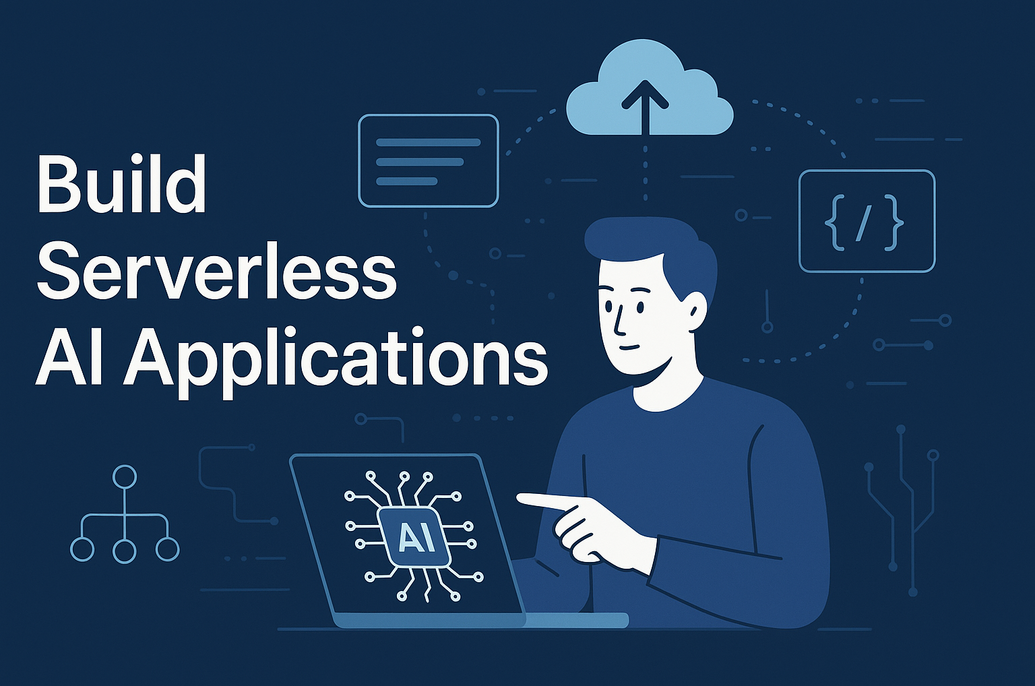
Build Serverless AI Applications
In today’s rapidly evolving tech landscape, the combination of serverless architecture and artificial intelligence (AI) offers a powerful way to create scalable, cost-effective, and flexible applications. Whether you’re a developer, startup, or enterprise, learning how to build serverless AI applications can significantly accelerate your product development lifecycle and reduce operational overhead.
In this comprehensive guide, we’ll explore what serverless AI applications are, why they’re beneficial, and how you can start building your own with real-world examples and best practices.
Understanding Serverless AI Applications
What Are Serverless AI Applications?
Serverless AI applications leverage cloud provider-managed services where the infrastructure automatically scales based on demand. Instead of managing servers, developers focus purely on writing code—especially AI models and logic—to deliver intelligent features.
In this architecture, cloud services handle the backend resources like compute, storage, and networking. Popular examples of serverless platforms include AWS Lambda, Azure Functions, and Google Cloud Functions.
Benefits of Using Serverless for AI
- Cost efficiency: Pay only for the compute time you use.
- Automatic scalability: Seamlessly scale AI workloads without worrying about infrastructure management.
- Faster development: Focus on your AI logic rather than provisioning servers.
- Reduced operational overhead: No patching, monitoring, or maintaining servers.
- Integration: Easily integrate with other cloud AI services like databases, messaging, and storage.
Choosing the Right Tools and Platforms
Serverless Frameworks and Cloud Providers
Several cloud platforms and frameworks simplify building serverless AI applications. Here’s a brief overview of the top choices:
- AWS Lambda: Supports multiple languages; integrates with AWS AI/ML tools like Amazon SageMaker and Rekognition.
- Azure Functions: Good for .NET developers; integrates well with Azure Cognitive Services.
- Google Cloud Functions: Great for Python and Node.js with strong AI APIs like Cloud Vision and Natural Language.
- Serverless Framework: An open-source framework to deploy serverless apps across multiple clouds.
AI and Machine Learning Services
Many cloud providers offer pre-trained AI models and machine learning tools you can integrate into your serverless workflows:
- Amazon SageMaker: Build, train, and deploy ML models at scale.
- Google AI Platform: Integrate AI capabilities like translation, speech recognition, and vision.
- Azure Cognitive Services: Ready-made APIs for vision, speech, language, and decision-making.
How to Build Serverless AI Applications: Step-by-Step Guide
1. Define Your Application Use Case
Identify what AI feature or application you want to create. Examples could be real-time image recognition, chatbot integration, language translation, or predictive analytics.
2. Choose Your Serverless Platform and AI Services
Select the cloud provider and serverless framework that best match your requirements and skill set. For instance, if you want to build a text sentiment analysis app, you might choose AWS Lambda integrated with Amazon Comprehend AI service.
3. Set Up Your Development Environment
Install the necessary CLI tools and SDKs. For example, for AWS Lambda, install AWS CLI and AWS SDK. Set up your project structure and permissions:
// Example: Set up AWS Lambda function with Node.js
// handler.js
exports.handler = async (event) => {
    // Log the incoming event for debugging
    console.log('Received event:', JSON.stringify(event, null, 2));

    // Implement AI logic or invoke AI service here
    const response = {
        statusCode: 200,
        body: JSON.stringify('Hello from Serverless AI Application!'),
    };
    return response;
};
4. Integrate AI/ML Services
Invoke AI APIs from within your serverless function. Here’s an example using AWS Comprehend for entity recognition:
// Example: Using AWS SDK to analyze text with Amazon Comprehend
const AWS = require('aws-sdk');
const comprehend = new AWS.Comprehend();

exports.handler = async (event) => {
    const text = event.text || 'Hello world';
    const params = {
        LanguageCode: 'en',
        Text: text
    };

    try {
        const data = await comprehend.detectEntities(params).promise();
        return {
            statusCode: 200,
            body: JSON.stringify(data)
        };
    } catch (error) {
        return {
            statusCode: 500,
            body: JSON.stringify(error.message)
        };
    }
};
5. Deploy and Test Your Application
Use your cloud provider’s deployment tools or the Serverless Framework to deploy your app. Then test with real input data, monitor performance, and iterate on improvements.
Best Practices for Building Serverless AI Applications
Optimize Cold Starts
Serverless functions can experience latency during cold starts. To minimize this:
- Keep functions lightweight.
- Use provisioned concurrency if available.
- Choose languages with faster startup times like Node.js or Python.
Secure Your AI Workflows
- Use IAM roles and policies to limit permissions.
- Encrypt sensitive data in transit and at rest.
- Validate all inputs rigorously to avoid injection attacks.
Monitor and Log Effectively
Leverage cloud monitoring tools like AWS CloudWatch, Azure Monitor, or Google Stackdriver. Proper logging helps troubleshoot and optimize your AI applications continuously.
Real-World Examples of Serverless AI Applications
Chatbots with Sentiment Analysis
Many companies build customer support chatbots using serverless functions integrated with AI sentiment analysis APIs. This approach allows dynamically scaling chatbots during peak hours without overhead.
Image and Video Analysis
Using services like AWS Rekognition or Google Cloud Vision within serverless functions, developers can build apps that analyze images and videos for content moderation, object detection, or facial recognition.
Personalized Recommendations
Serverless AI can provide real-time personalized recommendations by combining user behavior data with ML inference, enabling companies to boost engagement and conversions effectively.
Conclusion
Learning to build serverless AI applications unlocks a new level of innovation by combining the agility of serverless architectures with the power of artificial intelligence. This synergy not only accelerates development but also optimizes costs and scalability.
Whether you’re starting with simple AI integrations or building complex machine learning models, adopting serverless technology will allow you to deliver smarter, faster, and more efficient applications.
Start building your serverless AI application today by experimenting with the cloud services mentioned in this guide and leverage the many advantages that serverless architectures offer.

Kamran Afzal is a passionate programming mentor dedicated to helping aspiring developers become proficient in Drupal. With extensive industry experience, Kamran is committed to sharing his knowledge and guiding learners from beginner to advanced levels. His YouTube channel, Programming Mentor, offers clear and engaging tutorials on a variety of topics. Skills: Drupal 9, 10, 11, PHP frameworks, AWS, React, Angular, Node.js, MySQL, Apache, Nginx, Apache Solr, Elasticsearch, Memcache, REST API, Git, Twig

0 Comments