



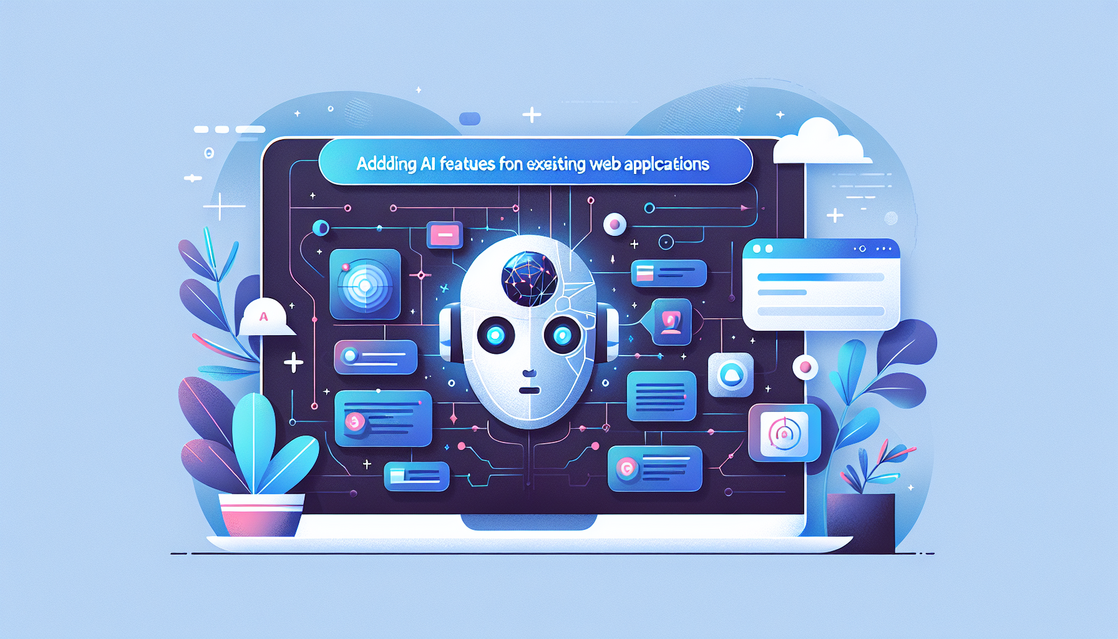
Add AI Features to Existing Web Applications
Artificial Intelligence (AI) is transforming the digital world by enabling smarter, more intuitive applications. If you manage or develop a web application, you might be wondering how to Add AI Features to Existing Web Applications. Integrating AI doesn’t always mean starting from scratch; many AI capabilities can be layered onto your current platform to enhance user experience, improve automation, and increase engagement.
In this comprehensive guide, we’ll walk you through the steps and strategies for effectively adding AI features to your existing web applications — from choosing the right AI tools to practical implementation tips and real-world examples.
Understanding the Benefits of Adding AI Features
Why Integrate AI into Your Web App?
Before delving into the “how,” it’s crucial to understand the “why.” Adding AI features to existing web applications can bring several advantages:
- Enhanced User Experience: AI powers personalized recommendations, chatbots, and voice assistants to make user interactions more dynamic.
- Automation: AI can automate repetitive tasks such as data entry, content moderation, or customer queries, saving time and resources.
- Data Insights: Intelligent algorithms help analyze user data to provide actionable insights for improving your service.
- Competitive Edge: Incorporating AI keeps your product ahead by integrating emerging technologies that customers expect.
Choosing the Right AI Features to Add
Assess Your Application’s Needs
Start by analyzing your current app’s functionality and challenges. Some key questions to consider:
- What repetitive or time-consuming tasks can be automated?
- Where can personalized experiences add value for your users?
- Are there bottlenecks in customer support or data handling?
Based on the answers, you may decide to incorporate features such as chatbots, recommendation engines, image or speech recognition, or predictive analytics.
Explore Common AI Features for Web Apps
- Chatbots and Virtual Assistants: Automate customer service using AI-powered conversational interfaces.
- Recommendation Systems: Suggest relevant products or content based on user behavior.
- Natural Language Processing (NLP): Process and understand user input, enabling voice commands or sentiment analysis.
- Image and Video Recognition: Automatically tag, categorize, or moderate images and videos.
- Predictive Analytics: Forecast trends and user actions to optimize your offerings.
Integrating AI into Your Existing Web Application
Selecting AI Services and APIs
Most developers don’t build AI models from scratch. Instead, third-party AI services provide robust APIs that you can integrate easily:
- Google Cloud AI: APIs for translation, vision, natural language, and more.
- Microsoft Azure Cognitive Services: Speech recognition, anomaly detection, chatbot frameworks.
- IBM Watson: Ready-made AI modules for language, vision, and data analytics.
- OpenAI API: Enables conversational AI, content generation, and natural language understanding.
- AWS AI Services: Broad suite including Lex chatbots, Rekognition for images, and Polly for text-to-speech.
Example: Adding a Chatbot Using OpenAI API and JavaScript
Here’s a beginner-friendly example of integrating a simple AI chatbot into a web app using OpenAI’s GPT API.
// JavaScript example to send user input to OpenAI and display response
// Make sure to replace YOUR_API_KEY with your actual OpenAI API key

async function sendMessageToChatbot(message) {
  const response = await fetch('https://api.openai.com/v1/chat/completions', {
    method: 'POST',
    headers: {
      'Content-Type': 'application/json',
      'Authorization': 'Bearer YOUR_API_KEY'
    },
    body: JSON.stringify({
      model: 'gpt-4',
      messages: [{ role: 'user', content: message }],
      max_tokens: 150
    })
  });

  const data = await response.json();
  return data.choices[0].message.content;
}

// Usage example
const userInput = "Hello, how can you help me?";
sendMessageToChatbot(userInput).then(reply => {
  console.log('Chatbot reply:', reply);
});
Integrating AI Features into Frontend and Backend
AI features can be integrated on both the frontend and backend, depending on your application architecture:
- Frontend Integration: Useful for AI features like chatbots, voice recognition, or interactive recommendations, where immediate user interaction is required.
- Backend Integration: Ideal for complex data processing, predictive analytics, or batch AI tasks running asynchronously.
Best Practices for AI Integration
Data Privacy and Security
When integrating AI, especially if using third-party APIs, ensure you handle user data carefully:
- Use encryption for data in transit and at rest.
- Only send necessary data to AI services.
- Comply with data protection regulations like GDPR or CCPA.
- Inform users transparently about AI usage and data handling policies.
Testing and Monitoring AI Features
AI behaves probabilistically, so thorough testing is essential:
- Test with diverse real-world input scenarios to ensure reliability.
- Monitor AI performance and user feedback continuously to refine models or adjust integrations.
- Prepare fallback mechanisms if AI fails or returns unexpected outputs.
Keeping It User-Friendly
Even the smartest AI should enhance usability without overwhelming users:
- Make AI interactions intuitive with clear instructions.
- Allow users to opt-out or switch between AI and manual modes.
- Use AI to assist, not replace, human interactions where appropriate.
Conclusion
Adding AI features to existing web applications is no longer a futuristic concept but a practical, achievable enhancement to boost user engagement and operational efficiency. By evaluating your app’s needs, selecting the right AI tools, and following best practices, you can seamlessly integrate intelligent functionality that sets your application apart.
Remember, the key to successfully Add AI Features to Existing Web Applications lies in thoughtful planning, secure execution, and continuous optimization. Start small, test thoroughly, and scale as you grow.
If you’re ready to elevate your web application with cutting-edge AI capabilities, dive in today and experience the transformative power AI brings to digital experiences.

Kamran Afzal is a passionate programming mentor dedicated to helping aspiring developers become proficient in Drupal. With extensive industry experience, Kamran is committed to sharing his knowledge and guiding learners from beginner to advanced levels. His YouTube channel, Programming Mentor, offers clear and engaging tutorials on a variety of topics. Skills: Drupal 9, 10, 11, PHP frameworks, AWS, React, Angular, Node.js, MySQL, Apache, Nginx, Apache Solr, Elasticsearch, Memcache, REST API, Git, Twig

0 Comments