





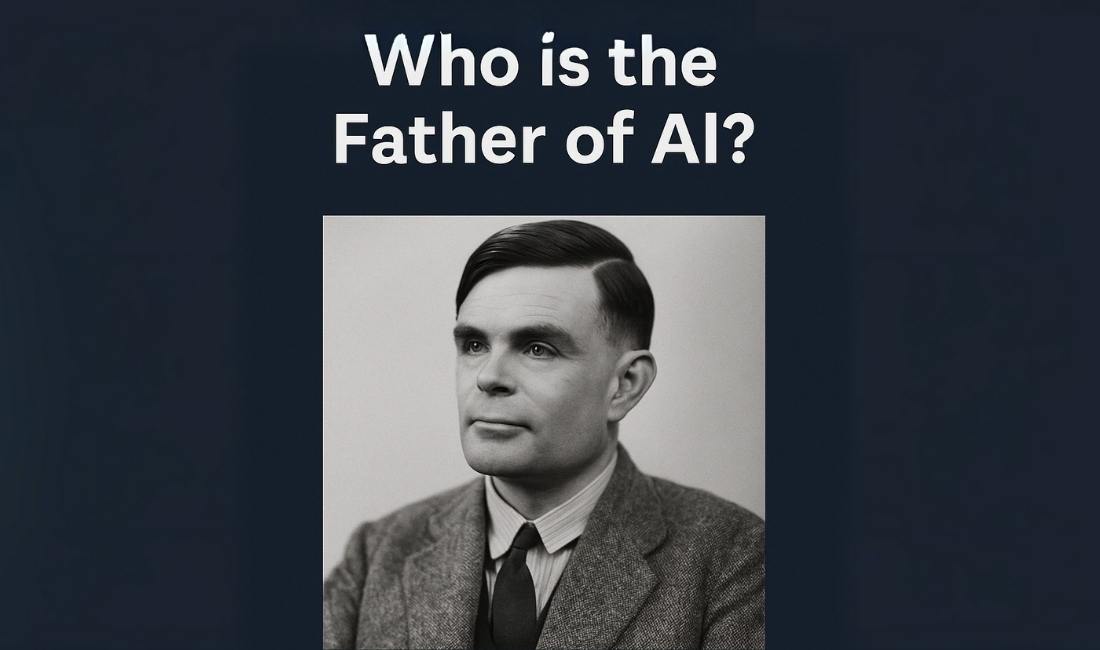
Who is the father of AI?
Artificial Intelligence (AI) has become a cornerstone of modern technology, influencing industries from healthcare to finance and even blogging tips 2025. But an interesting question often arises: Who is the father of AI? Understanding the roots of AI not only helps us appreciate its evolution but also inspires those diving into cutting-edge technologies or even starting a blog using WordPress for beginners. In this article, we will explore who is considered the father of AI, the early milestones of artificial intelligence, and how this technology continues to shape our digital world.
The Pioneers Behind Artificial Intelligence
Before diving directly into the answer to Who is the father of AI?, it’s essential to understand that AI is a field born from the contributions of many brilliant minds. Let’s explore some of these pioneers.
Alan Turing: The Visionary
Alan Turing is often considered one of the earliest contributors to theoretical AI. His work during the 1930s and 1940s laid the foundation for computer science itself. The “Turing Test,” proposed in 1950, remains a fundamental concept used to measure a machine’s ability to exhibit intelligent behavior.
- Proposed the idea of a machine that could simulate any other machine
- Introduced the concept of “computability” and algorithms
- Outlined the idea of machine intelligence that sparked AI research
John McCarthy: The Father of AI
When asking Who is the father of AI?, John McCarthy’s name often rises to the top. He coined the term “Artificial Intelligence” in 1956 and was an instrumental figure in organizing the Dartmouth Conference, which is widely credited as the birth of AI as a formal field.
- Coined the term “Artificial Intelligence” in 1956
- Developed the programming language LISP, fundamental for AI research
- Organized the Dartmouth Summer Research Project on AI—kickstarting AI as a formal discipline
Marvin Minsky and Others: Building the Early Framework
Alongside McCarthy, Marvin Minsky, and other scientists such as Allen Newell and Herbert A. Simon was a key figure who contributed to early AI research. They developed foundational theories and programs that simulated human problem-solving and reasoning.
- Minsky co-founded the MIT AI Lab
- Newell and Simon created the Logic Theorist, a pioneering AI program
- Helped define symbolic AI — representing knowledge and solving problems logically
How AI Evolved Since Its Inception
Understanding who the father of AI is? opens a window into the fascinating journey AI has undergone, marked by breakthroughs, challenges, and ongoing innovation. This section breaks down AI’s evolution into digestible phases.
The Beginnings: Symbolic AI and Early Enthusiasm
In the late 1950s and 1960s, AI research revolved around symbolic AI or “Good Old-Fashioned AI” (GOFAI).
- Researchers focused on logic and rule-based systems
- Programs achieved early successes in problem-solving and game-playing
- The expectation was that machines would soon match human intelligence
However, as these early systems struggled with complexity and practical situations, AI faced skepticism, leading to what is called the “AI Winter,” a period of reduced funding and interest.
The Rise of Machine Learning and Neural Networks
The late 1980s and 1990s saw the resurgence of AI with a shift towards machine learning and neural networks.
- Machine learning focuses on allowing computers to learn from data rather than hard-coded rules
- Neural networks – inspired by brain structures – became popular, setting the groundwork for deep learning
- Breakthroughs in speech recognition, image processing, and natural language processing emerged
Modern AI: Deep Learning and Real-World Applications
Today, AI permeates almost every industry thanks to deep learning and big data. Real-world applications include self-driving cars, AI-powered chatbots, and recommendation engines.
- Big data and GPUs unlocked the potential of complex models
- Natural language models (like GPT series) revolutionized conversational AI
- AI tools now help bloggers with SEO, content generation, and analytics — useful when looking for blogging tips in 2025
Why Knowing the Father of AI Matters for Beginners
If you are new to AI or want to explore AI’s influence on digital platforms such as blogging or even using the best blogging platforms 2025, understanding its origin figures, like John McCarthy is insightful.
Inspiration from the Innovators
- Recognizing pioneers helps beginners appreciate the hard work behind AI’s convenience today.
- It encourages a mindset of innovation and curiosity, essential for any blogger or entrepreneur.
- You gain perspective on how the AI tools you use daily have been shaped by decades of research.
Practical AI in Blogging and Content Creation
Thanks to the evolution of AI, blogging has become easier, faster, and more adaptable. Here’s how AI relates to blog monetization and content management:
- SEO insights powered by AI help you rank higher in search engines
- WordPress plugins now integrate AI to optimize images, headlines, and readability
- AI can assist in generating creative content, freeing you up to focus on strategy
Choosing the Right Tools: WordPress and AI Integration
Beginners interested in blogging should explore WordPress for beginners and its AI-based extensions.
- AI-powered SEO plugins like Rank Math or Yoast enhance visibility
- Chatbots and customer service plugins powered by AI improve engagement
- Content optimization tools provide keyword suggestions based on trends like blogging tips 2025
Summary and Final Thoughts
So, who is the father of AI? While many brilliant minds shaped artificial intelligence, John McCarthy is widely regarded as its father due to coining the term and organizing the field’s first formal conference. Alongside other luminaries such as Alan Turing and Marvin Minsky, McCarthy’s work launched the AI revolution that continues to impact technology, industries, and even blogging strategies today.
Whether you’re a beginner exploring the influence of AI on blogging or someone interested in the history of this transformative technology, understanding the roots of AI helps contextualize its current and future applications. With AI’s integration into the best blogging platforms in 2025, and tools available for blog monetization and enhancement, embracing AI-powered solutions is now a key strategy for digital success.
If you want to learn more about both AI and how it can support your blogging journey, stay tuned for upcoming posts that dive into AI-assisted blogging, content strategies, and the latest WordPress tools for beginners.

Kamran Afzal is a passionate programming mentor dedicated to helping aspiring developers become proficient in Drupal. With extensive industry experience, Kamran is committed to sharing his knowledge and guiding learners from beginner to advanced levels. His YouTube channel, Programming Mentor, offers clear and engaging tutorials on a variety of topics. Skills: Drupal 9, 10, 11, PHP frameworks, AWS, React, Angular, Node.js, MySQL, Apache, Nginx, Apache Solr, Elasticsearch, Memcache, REST API, Git, Twig

0 Comments